
en
FR
DE
IT
Pillar 3 and Self-Employment: The Complete Guide
Reading time: 7 min.Are you just starting out on the great adventure of self-employment, or have you been self-employed in Switzerland for some time now? Congratulations! But be careful: it’s essential to start thinking about your retirement savings right away.
Unlike employees, self-employed individuals aren’t required to be enrolled in a pension fund. Without this automatic coverage, the relationship between the third pillar and self-employment becomes a key priority for building your future financial security.
So, how does the third pillar work when you’re self-employed? What are the applicable contribution limits? How can you deduct your payments from your taxes? We’ll explain everything in detail so you can make the best choices for your future.

Why is it essential to link the 3rd pillar to self-employment?
In Switzerland, the pension system is based on three pillars designed to complement one another:
The 1st pillar (AVS/AI): mandatory for everyone, it covers the minimum cost of living.
The 2nd pillar (LPP): mandatory for employees, it aims to maintain the previous standard of living.
The 3rd pillar (private pension plan): optional, it helps fill the gaps in the1st and2nd pillars and optimize your tax situation.
When you are self-employed, you are required to enroll in the AVS (first pillar), but enrollment in the second pillar (LPP) is optional.
In reality, many self-employed individuals choose not to join an LPP pension fund due to the costs and administrative requirements involved. The major risk: upon retirement, the AVS alone will generally provide only 20% to 30% of your final income.
Taking out a 3rd pillar plan as part of your self-employment therefore becomes the primary way tobuild your own retirement savings to maintain your standard of living when the time comes, as well as to significantly reduce your annual tax bill starting today.
What are the contribution limits for the 3rd pillar for the self-employed?
Swiss law provides favorable rules to compensate for the lack ofa second pillar for self-employed individuals. The maximum amounts allowed for the tied third pillar (3A) depend directly on whether or not you choose to join a pension fund.
Case #1: You do not have a2nd pillar
If you are not enrolled in an occupational pension plan, you are entitled to contribute up to 20% of your net self-employment income (after deducting AVS/AI/APG contributions) to your 3A pillar, up to a maximum limit set by law (set at 36,288 CHF for the year 2026).
Practical example: If your annual net income is CHF 60,000, you can contribute 20%, or CHF 12,000, to your Pillar 3A account. And the advantage is that the entire amount will be tax-deductible!
Case #2: You are voluntarily enrolled in a2nd pillar plan
If you’ve chosen to voluntarily enroll in a pension fund (for example, through your professional association), you’re subject to the same contribution limit as employees. For the year 2026, this limit is set at 7,258 CHF.
Pilla’s tip: To optimize your withdrawals and reduce your future tax burden when you withdraw your funds, it’s always recommended to open multiple Pillar 3A accounts and spread out your contributions instead of putting everything into a single account.
How does the tax benefit work if you’re self-employed?
Pillar 3A is a savings tool that benefits from a very favorable tax framework in Switzerland: every franc contributed to your 3A account directly reduces your taxable income, within the permitted limits.
An immediate impact on your taxes
When you file your tax return, you report the total contributions made to your Pillar 3A account during the calendar year. The amount is then fully deducted from your taxable income (up to the 20% limit or the statutory limit).
Result: Your total tax bill (federal, cantonal, and municipal taxes) decreases significantly.
Examples
Example 1: Consider a single person with no children who is self-employed in the canton of Geneva, has an annual taxable income of CHF 130,000, and is enrolled in a pension fund. By contributing the maximum allowed amount of CHF 7,258 to their Pillar 3A account, they can realize a direct tax savings of approximately CHF 2,503, depending on their tax rate and family situation.
Example 2: Let’s consider again the case of this single person, without children, working as a self-employed individual in the canton of Geneva, with a taxable annual income of CHF 130,000, but this time not enrolled in a pension fund. By contributing the maximum allowed amount to her Pillar 3A account (20% of her income reported to the AVS, or CHF 26,000), she can achieve a direct tax savings of approximately CHF 8,733, depending on her tax rate and family situation.
In addition, the capital accumulated in your Pillar3A account is completely exempt from wealth tax, and the returns generated each year are not subject to income tax as long as they remain invested.
Pillars 3A and 3B: Which Option Is Best for Your Business?
When people talk about the 3rd pillar, they’re usually referring to Pillar 3A. This is by far the best option for self-employed individuals, simply because it offers the most significant tax deductions.
There is also Pillar 3B (the “free” pillar), which functions more like a flexible savings plan with no lock-in period until retirement, but with a much more limited tax advantage. To learn more about the specifics of each option, feel free to check out our comprehensive guide: Pillar 3A vs. 3B: The Differences Made Simple.
In summary: Focus your savings efforts primarily on Pillar 3A to maximize your annual tax savings, and use Pillar 3B as a supplement if you want to set aside money that’s accessible at any time for your business or personal projects.
Can I use my Pillar 3 to finance or wind down my self-employment?
In principle, the money in your Pillar 3A is locked up until five years before the legal retirement age. However, Swiss law provides for very specific cases of early withdrawal, including starting a self-employed business. If you choose to start your own business, you are therefore entitled to withdraw funds from your3rd pillar to finance the launch of your business. This withdrawal must generally be made during the first year of business operations.
FAQ: Frequently Asked Questions About Retirement Savings and Self-Employment
When during the year should I make my contributions to my 3rd pillar (3A)?
You can make contributions to your 3rd pillar whenever you wish between January 1 and mid-December. If your self-employment income fluctuates from month to month, you can make a single payment at the end of the year once your revenue has stabilized, or set up flexible monthly payments.
What happens if my income varies from year to year?
This is a major advantage of the bank-based 3rd pillar: you’re under no obligation to contribute a fixed amount each year. Consequently, if business is slow during a given year, you can reduce your contributions or make none at all. Conversely, if it’s a successful year, you can contribute the maximum amount to reduce your tax bill.
What should I do with the retirement savings from my previous job as an employee?
If you were an employee before starting your self-employed business, you likely have BVG pension savings from your former pension fund (or2nd pillar). These funds must be transferred to a vested benefits account. You can easily manage them at and handle them in the same place as your 3rd pillar, particularly using the Pilla pension app. For more information on the vested benefits account, check out our dedicated article.
7. Conclusion: Take Control of Your Retirement Planning with Pilla
Working as a self-employed individual offers the freedom to be an entrepreneur but requires extra effort to organize your financial security. Combining a 3rd pillar plan with self-employment is the best way to build your retirement savings while benefiting from immediate tax breaks.
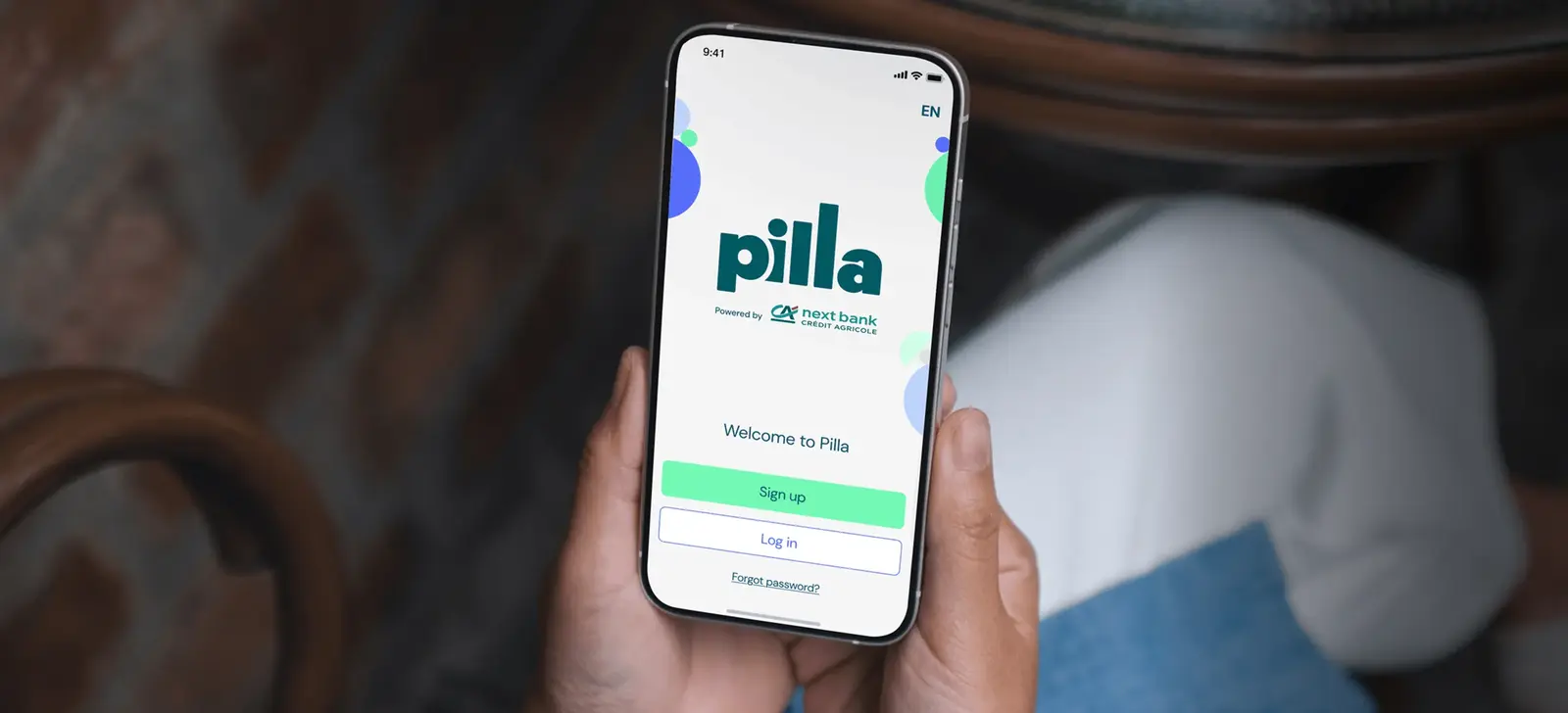
With Pilla, say goodbye to complex paperwork. You can open, manage, and grow your 3rd pillar and your vested benefits account directly from your smartphone—with ease.
* This is an estimate. Tax savings depend on each individual’s personal situation. For cross-border workers, the tax benefit associated with holding one or more Pillar 3A accounts applies only to those with quasi-resident status.
Related articles









Your pension at your fingertips
Manage and optimise your pension at any time.
Scan this QR code with your smartphone.

Available on

